A journal following the history, design, construction and operation of Bernard Kempinski's O Scale model railroad depicting the U. S. Military Railroad (USMRR) Aquia-Falmouth line in 1863, and other model railroad projects.
©Bernard Kempinski All text and images, except as noted, on this blog are copyrighted by the author and may not be used without permission.
-----------------------------------------------------------------------------------------------------------------------------------------------------------------
Showing posts with label Layout Tours. Show all posts

July 26, 2026

Dixie Rail 2026


Op Session 29

I hosted Op Session Number 29 on 11 July. Five visitors from Williamsburg, Mat Thompson, Ed Rappe, Jim Taverna, Alan Balma and Rich Feller  attended. Local, Marty McGuirk filled in the final spot. The session went pretty well. I did note some problems. Engine Fury, which is normally the work horse, seemed to lose some pulling power. It was slipping on the grades in the tunnels. So we swapped it for Whiton, and Whiton ran fine. I need to check Furywhen I get a chance

On Wednesday, I departed Alexandria for Atlanta to attend DixieRail 2026 as a guest of Scott Dunlap, an old friend. I got to operate on three layouts, Jim Travis, Howard Goodwin and Mark Bridgewater. They were lots of fun. 


Jim's layout spans three rooms of his large basement. It's a large loop with several industries. I ran mostly through trains, with one that required some switching. Jim's wife Kim gave me a tour of the structures she built and detailed. They were very nice. 


Howard's layout was two stub staging yards in the garage that feed  a J shaped loop in the basement. The trains are not too long, but there is a lot of activity. 


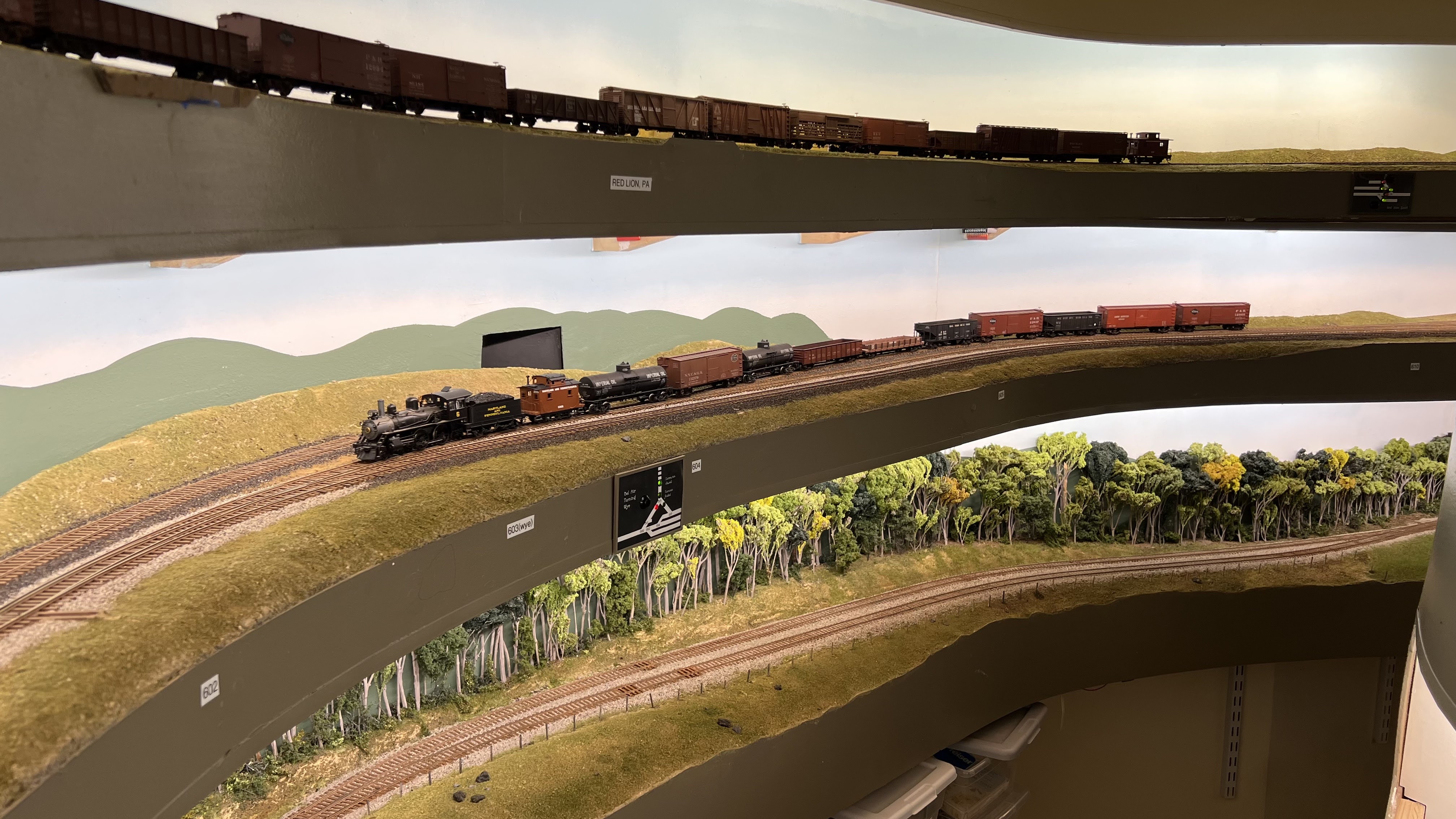
Mark's layout is only 20 months old, but it has the making of a top layout in the country. It is a 2500 square foot mushroom layout with two branch lines that are on separate decks. The mainline is about 600 feet with 7 passing sidings. The mainline is operational with some of the branches also working. Mark has built several fine layouts in the past, so I have great hopes for this one.

On Sunday, I headed up to Chattanooga stopping at 5 more model railroads.


The first was Bill Heb’s. This in a N scale layout that spans several rooms in his basement. The theme is the B&O in Ohio. The highlight of the layout is an automated transfer table as a staging yard. It is quite impressive.

Second was David Godwin's HO scale Georgia Central RR. It also spans several rooms in his basement with two decks plus a large peninsula in one room to house a large passenger terminal.


L


Next I visited Phil Stead's On3 DRGW. I was there 13 years ago. He has basically finished the layout. He has 13 engines, dozens of cars, and a fully sceniced layout that goes from flat drylands to mountain peaks. One of his helpers told me it is the largest On3 layout in the US. His wife painted the back drops too.


After Phil I stopped at the Tate Depot Museum where there are 2 layouts on display. Both are excellent. The Depot is a non profit organization that maintains the layouts and opens them to the public as a tourist attraction for the county. In return, the county covers most of the expenses. In addition to public sessions, the club also has their own work and operation meetings. 


The final layout was Steve Austin's On30 masterpiece. Steve expanded the layout by about 40% since I was last there. It is a highly detailed modeling tour du force. Steve probably has every detail part ever created in O scale. 

I am now in Chattanooga for the NMRA National Convention and Train Show.


November 15, 2023

Great Lakes Getaway 2024


I attended Great Lakes Getaway 2024 last weekend. I and 21 other out-of-town guests had the chance to operate on up to 5 great layouts in the greater Detroit area. 

On the first day I operated at Doug Tagsold’s C&S Layout today. It is a spectacularly beautiful model railroad. It is also one of the more complicated Timetable and Train Order layouts that I have run. There is lots to think about as you chug along or wait for meets. I ran an extra ore train that was basically swimming upstream against several scheduled trains. The long runs between control points combined with the slow speeds are unmatched in any model railroad that I am aware. Definitely one of my favorite railroads to operate and visit.

The day capped off with a fun group dinner. The food and company was great but the dang musician was so loud, my ears started ringing. 

View from my office for the day


On the second day I operated on Mike Burgett’s beyond museum quality C&O layout.  I am proud to have contributed to it with some structures and signals via Alkem Scale Models. 


I did my favorite job, West Clifton Forge Yard. That job builds trains and weighs coal hoppers. It all happens from one seated position which I do like.  It really feels like a real railroad when you operate at Mike's. This railroad with its dispatcher office and tower has to rank as one of the best in the country. 

That night I presented an after dinner talk to the group on an update on the Aquia Line.  Travers Stavac also presented his plans for his new layout that incorporates some of Paul Dolkos's former layout. 


Last layout for my trip was Bill Neale’s wonderful PRR Panhandle division. This was my second visit to Bill’s layout. This time I ran a through oil train, and a coal shifter. The pièce de résistance was being engine crew on a massive 45 coal hopper train with three crewmen each running a PRR decapod- 2 on the head and one snapper (aka pusher) on the rear. As an extra treat, Bill’s wife, Terry , provided a tour of their birdfeeders in the back yard and pointed out some of the birds we saw.

Three awesome railroads in 3 days. The Michigan hosts are also great hosts. Thanks to them for hosting a wonderful weekend.


Two decapods on the head and one one the rear with 45 coal hoppers. 

August 10, 2023

IPMS National Convention 2023


We just finished a whirlwind trip across America’s swamp land to the hill country of Texas. The main purpose of the trip was to attend the IPMS USA National Convention in San Marcos, TX. But we did a lot more that just drive through swamps and desert to get there. Highlights of the road trip included a tour of the Tabasco factory in Avery Island, witnessing 2 forest fires, seeing two model railroads in Houston, visiting the Texas Military Museum in Austin, seeing the battleship Alabama in Mobile, AL, and the US Naval Aviation Museum, Pensacola, FL. I went birdwatching most mornings and saw 22 lifers. We met two college friends.


The trip began with me riding AMTRAK Autotrain to Florida. I brought my car loaded with models and dioramas to exhibit at the meet. Those included the "High Road to Rome" diorama that my brother and I jointly built, the "Oracle at Delphi" box diorama (actually a vignette in IPMS rules), "Backdoor to the City of Charlemagne" a 1/56th scale vignette I built last year, and my SS Atlantic Tugboat and Railroad barge with 4 cars. The latter came straight off my Aquia Line layout. I built some carrying cases for them as I also plan to bring them to the APG Exhibition in Gettysburg in a few weeks. 

Once in Florida I stopped at the Orlando Wetlands park to do some bird photography. I stayed at my brother Rob's house in Melbourne. I did a bit more birdwatching on Sunday at Sebastien Inlet. 

Staging the models we would bring

Rob had some models he planned to exhibit, so we packed those too.  We headed out early Monday morning and linked up with Dan Pierce in Orlando. He was driving his own vehicle as he planned to bring back a lot of model kits to resell in his business. So we had three drivers for two vehicles. That worked pretty well as no one got too fatigued over the 2,500 mile road trip.

Our first night was spent in Lafayette, LA. Of course we ate Cajun food that evening. 

Rail fanning near Lafayette, LA


Next morning Dan had to drop his truck off at a mechanic's shop for some repairs. So we spent the morning rail fanning, birding Spanish Lake,  and visiting the Tabasco Factory on Avery Island. The Tabasco factory was very interesting. It still retains the charm of an old style factory despite getting peppers from around the world and shipping hot sauce in return after 3 years of fermenting.  

Dan, Al Partlow and Rob

That afternoon we arrived in Houston, TX and toured Al Partlow's and Mike Spoor's model railroads. We then visited Rob's fraternity brother, Spotswood, and his wife, Susan. They live south of Houston and have a large spread with a horse and donkey. We spent the night with them. 


Sunrise on the Blanco River at the house we rented

On Wednesday we drove to San Marcos, but now our convoy had 3 vehicles as Spotswood drove too. He is a retired chemical engineer who is starting to build air plane models that he has been collecting for much of his adult life.  We arrived at the convention and set up our models in the exhibit area. Then we drove to Wimberley Texas, about 20 miles west in the hill country where we had rented a beautiful house on the Blanco River. One other modeler joined us, Will Findley from Lakeland, Fl. So we had 5 modelers staying in the house. The house was beautifully equipped and decorated. It reminded of something Joanna and Chip Gaines from the TV show Fixer Upper might have done. Wimberley is a charming small town with many shops, restaurants, parks, and a Rock Island caboose on display. 

The convention was huge. Around a 1,000 modelers attended. There were over 3,100 models on display in 7 major categories. Those were divided into smaller sub-categories. Aircraft dominated with 53 sub-categories, followed by 38 Military Vehicle, 16 Figure, 18 Ship, 22 Automotive, 10 Space/Sci-Fi, and 12 Miscellaneous.  Almost all of these models are judged and awards for  1-2-3 are declared in each subcategory.  That is a lot of awards to process, but they seem to have the system down pat. If you want to see photos of almost all the models at the meet click on this link.

The vendor area was big, encompassing three rooms. But it was not as big as a typical National Train Show that usually accompanies the NMRA National Convention. Despite being smaller, it seemed like it was much busier in terms of sales. I saw lots and lots of people buying model kits, tools and books.  I purchased only one model kit and a single bottle of Vallejo paint. But, my 5 house mates fully joined in the frenzy. Our vehicles were packed to the brim with model kits on the trip home. 


IPMS members have what they call, "stashes." Those are piles of model kits they buy and accumulate. Model railroaders with hundreds of unbuilt kits will immediately identify with the concept, though I don't think model railroaders call them stashes. Many or most of the kits in the typical stash will never get built. Many eventually get recycled in estate sales and flea markets. But some do get built as evidenced by the 3,100 models on display. 

The IPMS USA National is a bit different than the NMRA National Conventions. The IPMS is focused on the model display and especially the contest. They do offer some seminars and clinics, but just a handful. They also offered a couple organized tours to local attractions. Compare that to a typical NMRA Convention where there are nearly 100 clinics and dozens of  tours, while the contest is much smaller. If 100 models show up at a NMRA contest that is a lot. 


Friday afternoon we visited the Military Museum of Texas at Camp Mabry in Austin. It was an excellent museum focused on the military history of Texas. We returned to the convention as we all we involved in judging. 


We are happy to report that we won some awards, despite the competition from many excellent models. The diorama Rob and I built jointly received a second place in group build category. I received third place awards for my Aachen vignette and for my tugboat and railroad barge. My Oracle at Delphi diorama received an informal award from the Huntsville Plastic Modelers Society. Finescale Modeler Magazine featured Rob’s Model T in their convention web gallery.  

We were joined for dinner by my fraternity brother Winslow Cuthbert and his wife Cathy on Saturday. While we were visiting, there was a forest fire just north of the house we are renting. Our dessert was interrupted as we watched Texas CL-415 Water bombers fly over to fight the fire. The home owners texted us and told us that we might have to evacuate. So we packed up just in case, but the firefighters got the fire under control and we did not have to leave early.


On Sunday we headed back. We stopped in Mobile, AL to see the Battleship Alabama and look at some of the other items they had on display. We arrived after the museum closed, but we still had a chance to look around the park. Then we had a delicious seafood dinner at a local restaurant that had fresh fish. 


We spent the night in Pensacola, FL. The next morning we visited the Naval Aviation Museum on the Pensacola Naval Air Station. It is a fantastic museum. It has been expanded into two buildings. There is also a restoration workshop that did not have time to visit. 

I made it back to Virginia on Thursday again via Autotrain. It was a great trip. We are energized to work on another group build. More on that later.


July 23, 2023

Sprague's Ma and Pa HO layout


Mat Thompson, Paul Dolkos and I had an opportunity to do the first “official” operating session on Bob Sprague's new HO scale Ma and Pa layout. Bob has designed an interesting multideck layout with a counter-flow double helix that connects the various levels. He has beautiful hand laid track, many scratch built structures including some he designed and printed using resin printers. I especially liked his tiny, but flawless running, steam engines and rolling stock appropriate for the 1920s. He also uses digitrax for command and control including remote activation of the turnouts. That was the first time I used that system and I liked it. He has an impressive three-level swing gate made with 80/20 aluminum. It’s very sturdy


May 25, 2023

Two Approaches to Branch Line Model Railroads

In the past few days I had the chance to visit Todd Hermann's and Marty McGuirk's model railroads. They both model branch lines, but they have completely different flavors. I am a big fan of branch line models railroads because they tend to be manageable projects that allow the builder to create highly detailed scenes and structures. In today's busy world with so many demands on people, having a project that is manageable is something that should not be undervalued. Many of us want to model multiple deck railroads with CTC and signals and massive yards with dozens of operators. But projects of such scope are unobtainable goals for most of us.  Building a manageable branch line doesn't mean you are settling for something less as these two fine layouts demonstrate. 

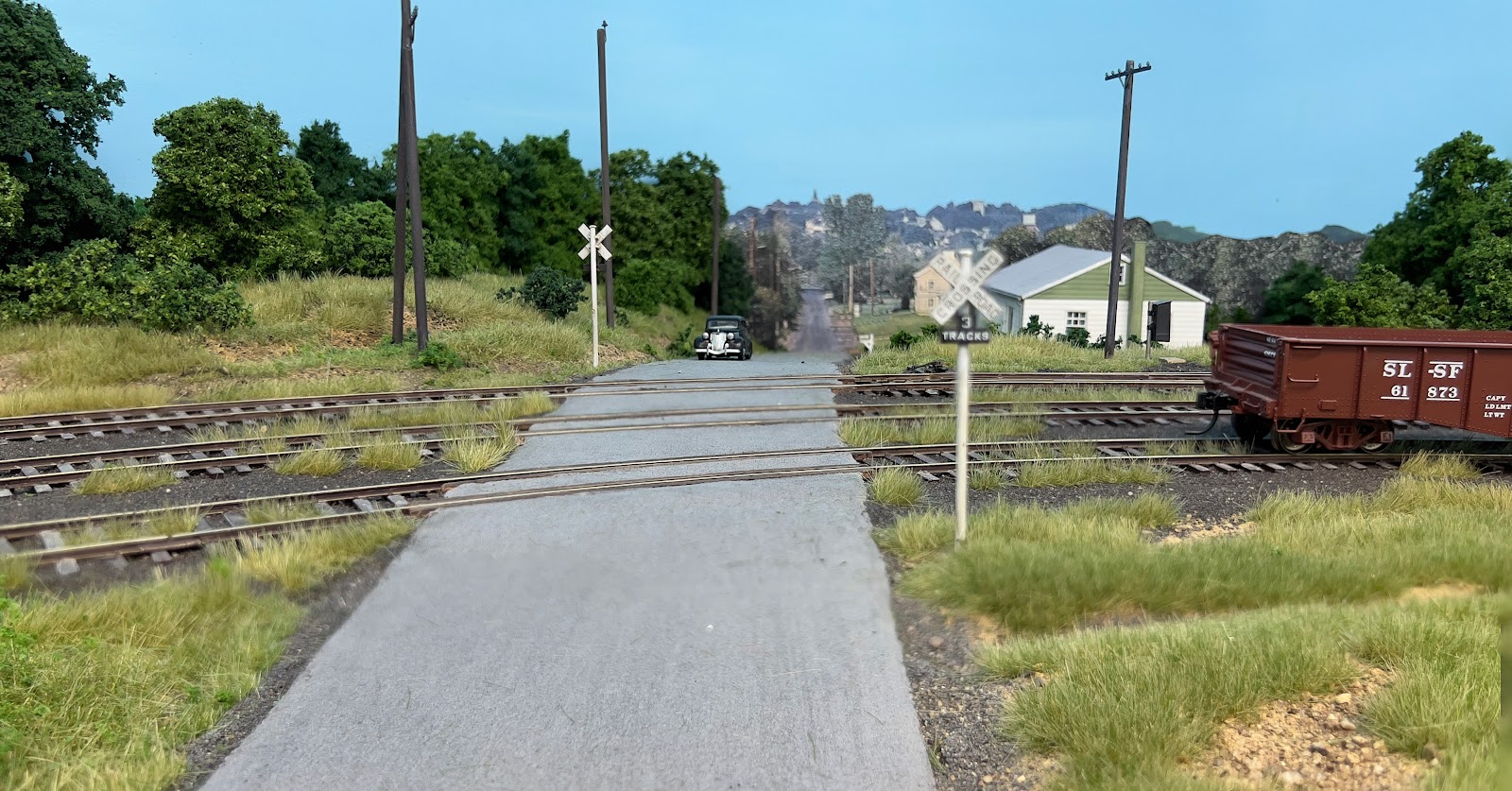
A very well done level crossing

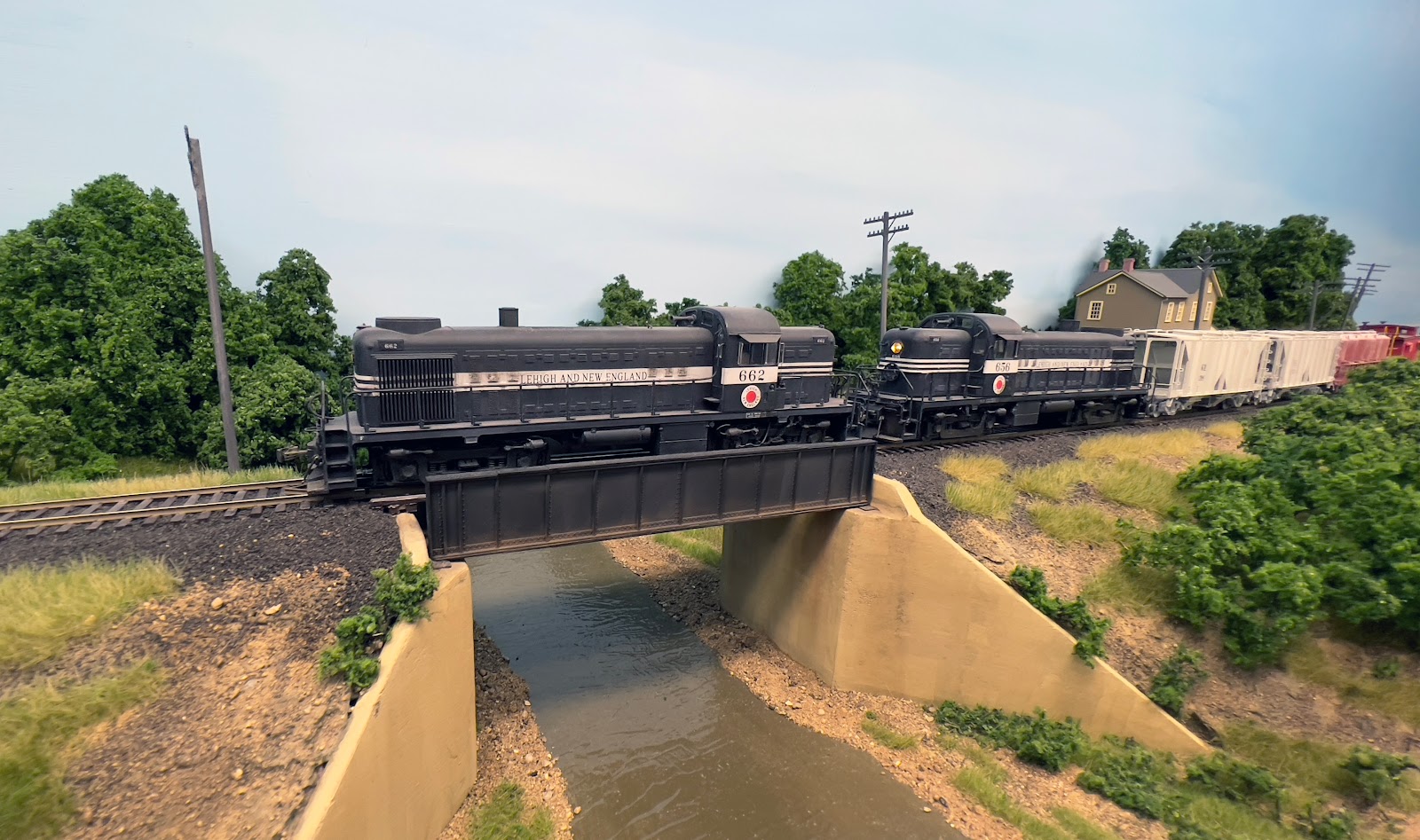
Todd models the area of Catasaqua, PA. This is a region crisscrossed by several railroads serving numerous heavy industries. Todd's main focus on is on the LNE, but he also has a large yard for the Reading Railroad and large section of the Lehigh Valley's 4-track line. His concept is to focus on the LNE but he needed the LV and Reading on the layout too as the LNE interchanged with both. 


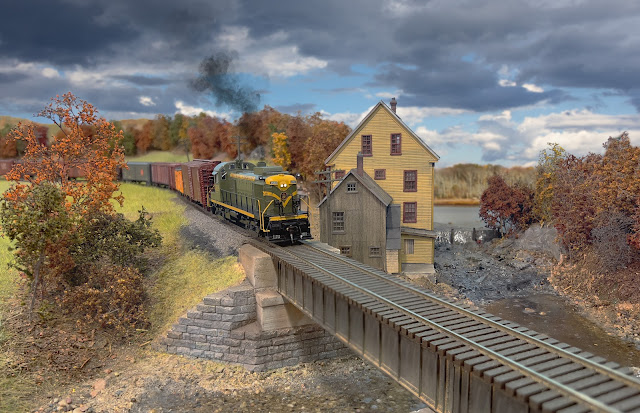
The LNE cross a creek in a wooded area. 

His layout includes a really neat diamond crossing  where the LNE crossing the LV 4 track mainline on a super sharp curve and then crosses Lehigh River. Because of the peculiarities of the how the railroad is situated in the basement, he had to build two versions of the bridge over the Lehigh River. For more detail on how he did this see Chapter 10 "Diamonds in the Tracks," in Model Railroader's book, "What's in a Photo." 


Despite the emphasis on heavy industry, Todd was able to include some bucolic scenes on his layout. 

Todd has several interesting prototype photos displayed on the walls of his layout rooms and workshop. Some that caught my eye were of the 19th century Crane ironworks that was once in Catasaqua. This would make a fascinating compact iron related model railroad. In the era Todd models the site was taken over by the Fuller Company who make parts for the cement industry. For more info about Todd's layout see this youtube video https://www.youtube.com/watch?v=x3Qniv0qnyk

A nearly finished scene on Marty's layout

Marty's layout features a rural area in northern Vermont where the Central Vermont Railroad serves paper mills, creameries, and small towns. His layout is conceptually simple but executed to a high level. He has interchange with two other railroads too. One thing I like about his layout is how he has lots of country in-between scenes of operational interest. He has a large basement, but he resisted the temptation to fill it with track and clutter.  


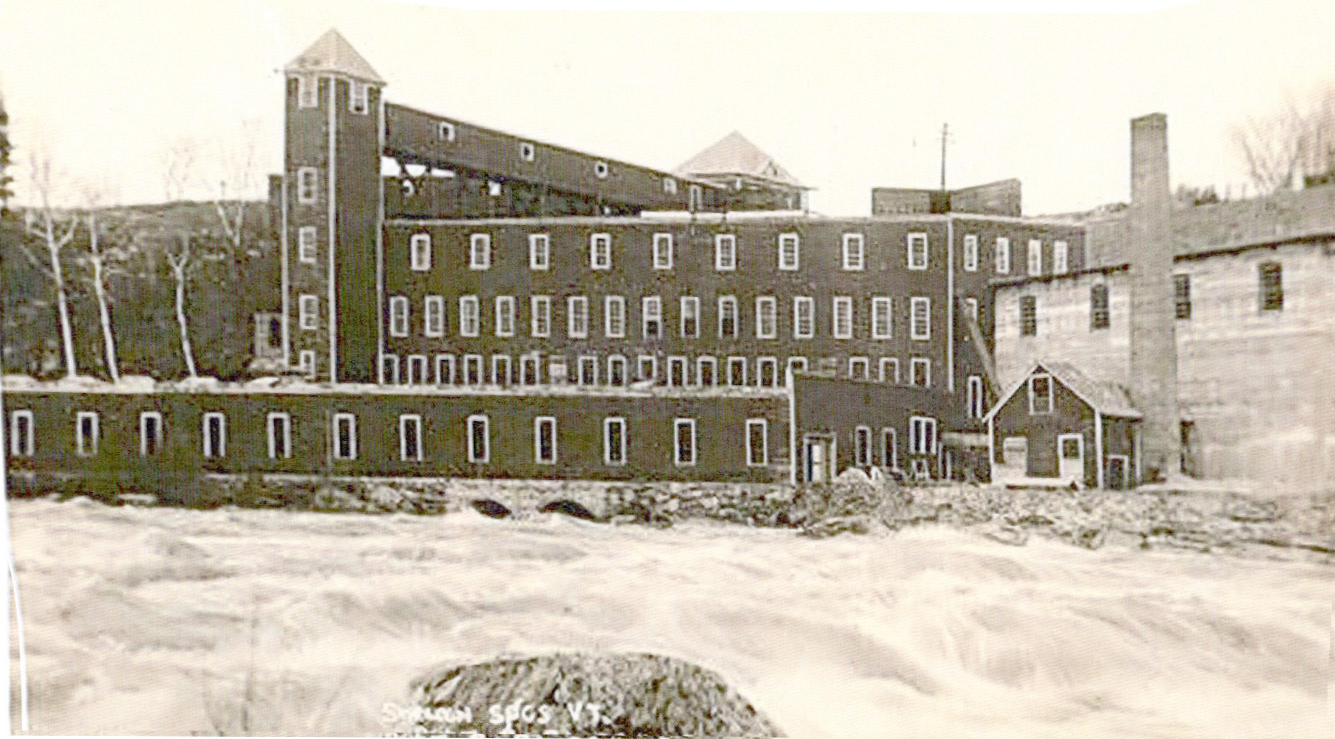
One of the highlights of Marty's layout will be his paper mill. I am helping his design the mill layout and build some of the structures for it so I may be a bit biased. However, he also has three other areas where lots of switching will happen. It will be a fun layout to operate. 

To learn more about Marty's layout see his blog at http://centralvermontrailway.blogspot.com/


December 18, 2022

Sergeant Santa at Fort Eustis

Photo of the MRS Volunteers in period uniforms with Sgt Santa.  Photo by the MRS.


Sgt Santa spreading the cheer. It's not a secret that this Santa 
is also a model railroader and member of the Chesapeake Bay
& Western Model Railroad Club
Chris Williams and I traveled to Newport News this weekend to participate in Operation Sergeant Santa. Chris is a former colleague of mine from my days at CBO. He is also a railfan and model railroader. He likes taking old British OO scale locomotives and rebuilding them to run on his small layout. His interest in British trains stems from his growing up in Northern England. But he has lived in the US for 35 years now and is also a rabid US railfan. Chris provided the British ROD 2-8-0 locomotive that I used in the WWI chapter in my book, "Model Railroads Go to War." 
Chris (l) and Eric(r) riding in the
 power car at the head end
We were invited to participate in Operation Sergeant Santa by Eric Payne. Eric and his dad, George, own and operate the Catalpa Falls Group LLC. They aim to make the Broadway Limited experience available again through the renovation and restoration of former Broadway Limited Pullman cars. They have a set of railcars that are wonderfully restored and can be used in charters and excursions. Last month I rode the car Catalpa Falls with Eric and his dad from NYC to Washington, DC. The cars are now at Fort Eustis to participate in Operation Sergeant Santa as part of the Military Railroad Society fund raising campaign.  The MRS is raising funds for restoration of USATC 5002, a Porter S100 class 0-6-0 tank engine. 

In addition to raising funds, the MRS will be volunteering to help restore some of the historic passenger cars while they are parked at Fort Eustis.  So its a symbiotic relationship as the MRS gets use of the cars for fund raising and training while the cars get secure storage and some restoration.


Chris and I packed a lot into the weekend. We started off with stops at Doswell and Ashland to do some rail fanning. Since it was a Friday, the Buckingham Branch was busy doing maintenance on  equipment.

Then we caught a northbound Regional AMTRAK making a station stop at Ashland. 

Next we went to the Mariners Museum in Newport News. That is one of my favorite museums. They reconfigured the exhibits since my last visit 10 years ago. There is now a large portion of the museum devoted to the USS Monitor and the CSS Virginia (formerly USS Merrimack). I really enjoyed walking through the full-scale dioramas they have constructed, especially the replica of the interior of the Monitor. Fun fact, the Monitor was the first ship to ever have a flushing toilet. 

They have an amazing collection of artifacts that were recovered from the sunken wreckage of the Monitor. Some of those artifacts were remains of sailors that died in the sinking. Alas, they have been unable to identify the remains precisely. 

One of the interesting artifacts was a reconstructed uniform that had to be painstakingly restored from scattered fragments. 

There are several components of the Monitor still under going preservation. The gun tubes have be soaking in a de-chlorination bath for over 20 years now! That process removes the chlorine from the saltwater that was absorbed by the iron so that the iron will not continue to corrode. They are hopeful that end of the preservation bath is in sight as some parts, such the anchor and engine, are already out of the preservation bath and will be put on display.


Roman cargo transport circa 1st Century AD

After touring the rest of the museum, including the spectacular ship models, we took a walk around the Mariner's Lake via the Noland Trail. We spotted several birds including 4 more for my life list.

Horseshoe Curve on Ed's layout
Later that night we visited Ed Rappe's and Jim Taverna's large O scale layouts. Ed models the PRR Horseshoe Curve region of the Middle Division and a coal branch, while Jim models the PRR Northern Central Division near Northumberland and its branches.  Both layouts are massive. They run long, impressive trains. It really is mind boggling.


This is just half of Northumberland
Yard on Jim's layout

The next morning we made a quick trip to visit Fort Monroe. It is no longer a military base. The fort is part of the US National Parks System while the State of Virginia and City of Hampton also have exhibits and displays to see. 

The fort is the largest masonry fort built in the US. It is hard to picture how large it is until you visit. It remained in Union hands through out the civil war. Many former slaves fled through Fort Monroe to freedom.  It is chock full of interesting exhibits.


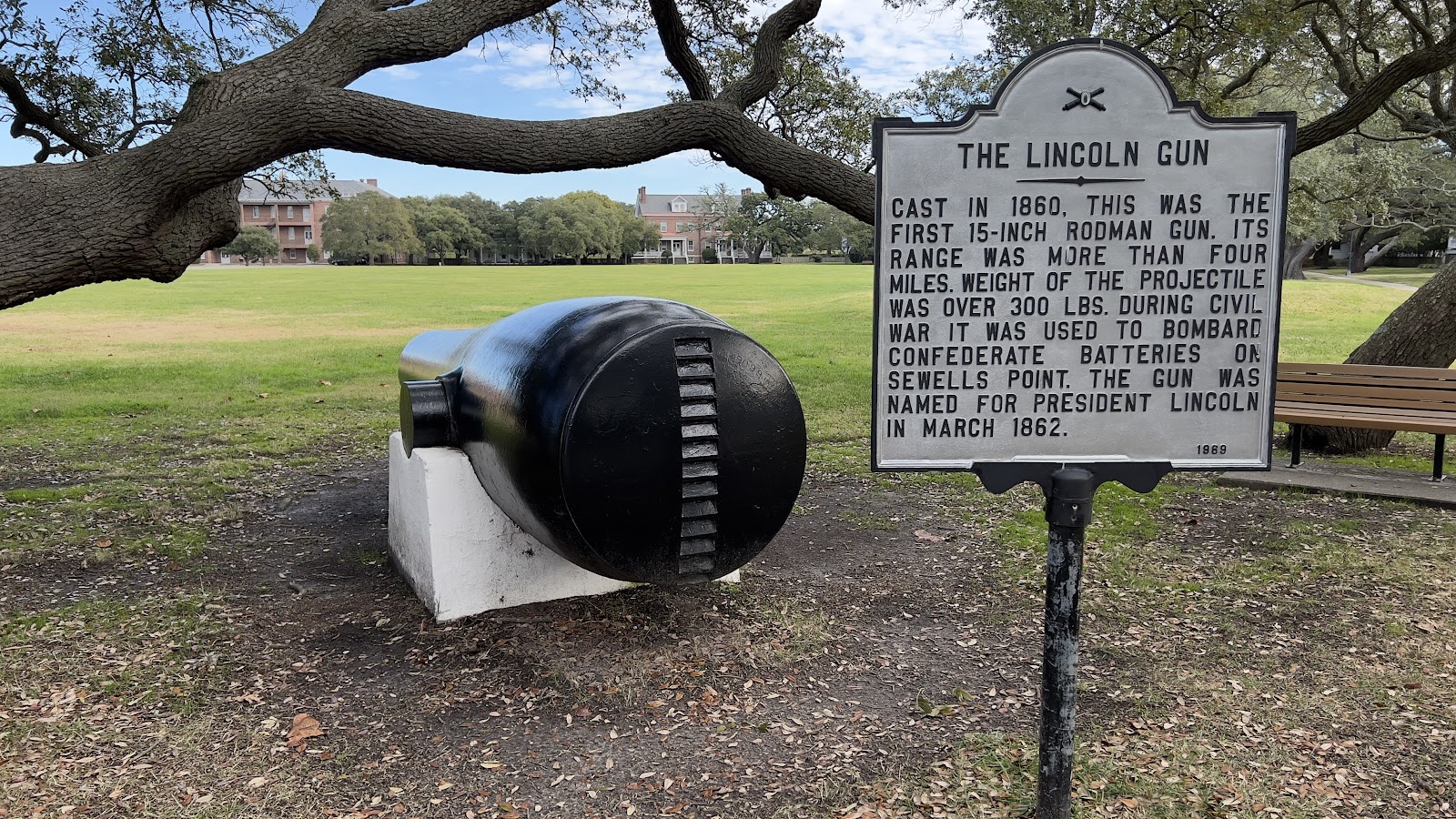
The fort had the first 15-inch Rodman gun that was named after President Lincoln. It was used to shell rebel positions across the river. It's my favorite civil war artillery piece. 


The former president of the Confederacy, Jefferson Davis, was imprisoned there for a while, but he never went to trial for treason.   We didn't have time to visit the museum and see his cell.


Next we arrived at Ft Eustis as guests of the SGT Santa. Sergeant Major Snyder escorted us on base where we met with several folks from the MRS including my friends Billy Grimes and SFC Michael Spoor.  Sometimes, it's a very small world.


Billy Grimes and Chris in the power car


Billy was one of the volunteers that were dressed in 1960s era Army uniforms to reenact the time period where the vintage passenger cars were in service (see lead photo.) 

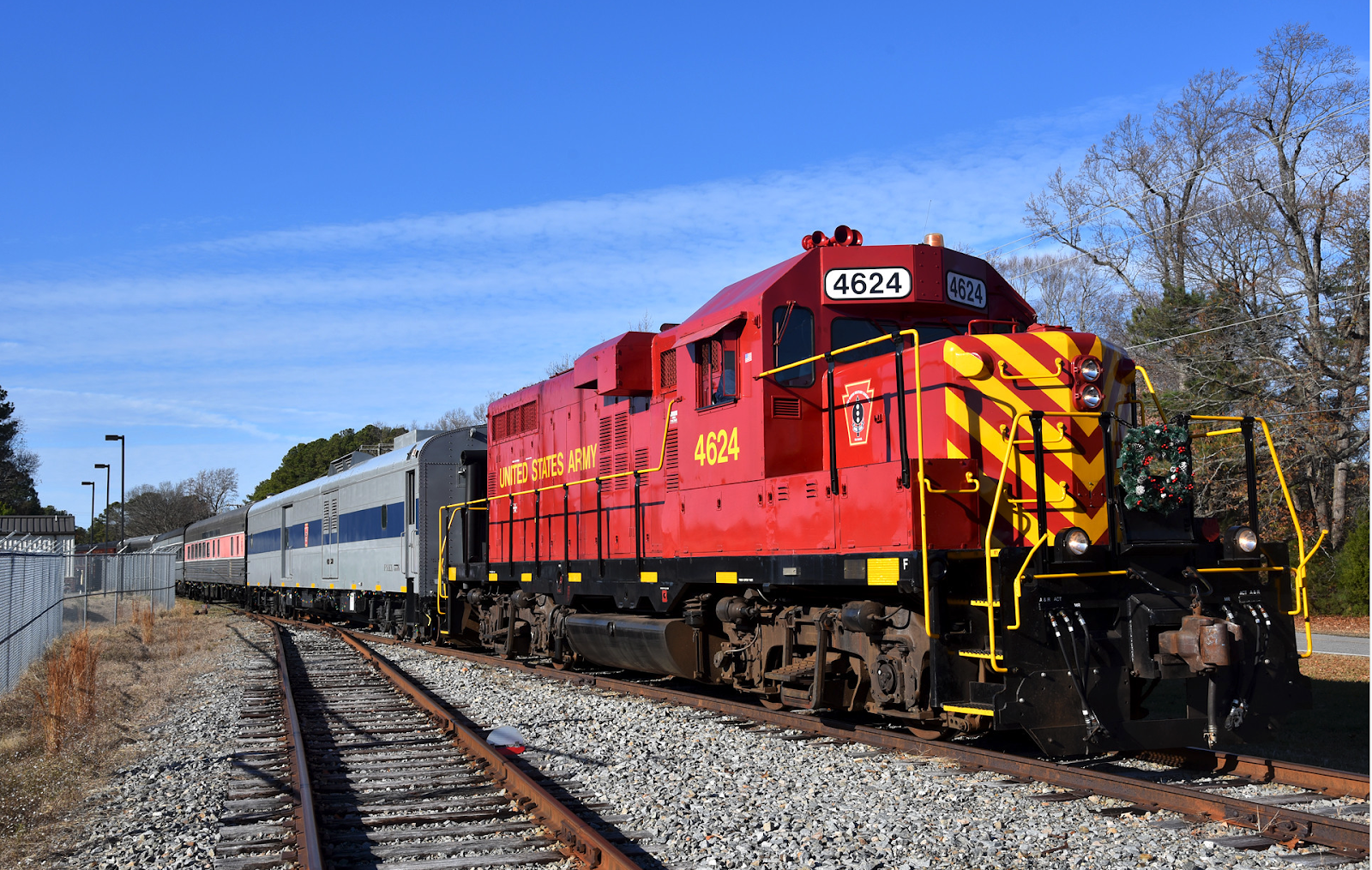
Mike was activated as a reservist to help support the weekend activities. He also had a chance to take some great photos of the restored cars being pulled by a US Army GP-10 (see last photo.)

Chris and I did two rides on the cars around the 8 mile loop of track at Fort Eustis. It was fun to see the railfans shooting pictures of the trains as they rolled across picturesque Fort Eustis. There were hundreds of US Army soldiers and their families riding the train and enjoying some holiday cheer.

After our second ride on the train, Chris and I stopped at the US Army Transportation Museum. The building was closed but we were able to see the outdoor exhibits that are now under protective roofs. The US Army had some really unusual equipment over the years.


USATC S160 Class Steam engine at the museum 


It was just a hoot to be part of the event. Everyone seemed to have a great time and hopefully they raised a good amount of money toward the restoration of the steam engine. Perhaps next year  they will have it pulling the Sergeant Santa train!

The GP10 that pulled the train. Photo by Michael Spoor