A journal following the history, design, construction and operation of Bernard Kempinski's O Scale model railroad depicting the U. S. Military Railroad (USMRR) Aquia-Falmouth line in 1863, and other model projects.
©Bernard Kempinski All text and images, except as noted, on this blog are copyrighted by the author and may not be used without permission.
-----------------------------------------------------------------------------------------------------------------------------------------------------------------

December 9, 2022

USMRR Tug Atlantic

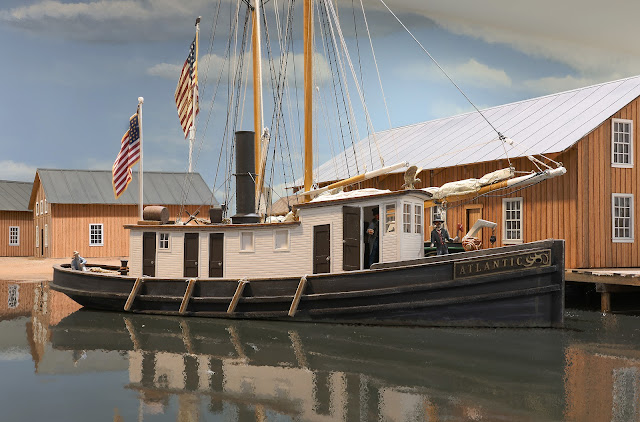
Almost finished tug boat model

We're back from the abyss....actually, we were lucky that it wasn't that bad. But my wife and I are both feeling better. We still have to wear masks for a few more days, but other than that, all good. I was able to sneak in some work on the tug boat in between naps. The tug is almost finished. I need to do some touch up, add a decal to the stack,  and finish the weathering. 

I chose the name, "Atlantic," because that was the name of one of the USMRR tugs that worked the car ferry from Alexandria to Aquia Landing. The other tug that they list as also working this route was the "Kirkman." I liked the sound of "Atlantic" better.


December 2, 2022

Notes from Quarantine


Last Saturday, we got back from a nice trip to Alabama to visit family over Thanksgiving. Then on Sunday, my son and daughter in Kentucky had a baby girl, Ruka Kotone Foster Kempinski. That makes our second grand daughter. All are doing fine.

I spent the first part of the week getting my new band saw set up. Unfortunately, I got sick yesterday and tested positive for COVID this morning. So far it's not too bad, but I am taking things easy. I have been staying in the basement and hope to get back to work on the layout.  

The Tug Boat 

I wanted to test out the new bandsaw. So I started building a 1860's era tug before finishing the Pungy. I figured the Pungy and its rigging will take some time, so I wanted to do a simpler boat in the meantime.  

The lead photo shows a group of three tugs in the James River. These appear to be typical screw propelled tugs from the era. One of the key features of those tugs versus later tugs is the squared-off deck and pilot house. Unfortunately, I have been unable to find any plans for that style tug. There is a photo of Tug No. 6 in the James River that is nearly a broadside view. So I using that to generate plans. 

I made the hull from two pieces of basswood glued together. Basswood is a great material for modeling due to its very tight grain. The band saw is necessary to cut the sheer line across the beam of the model. That was the first cut I made. Then I trimmed the over head view to create the overall shape.


I used my Rotex sander to shape the stern and bow.  The waterline model of the tug has a fairly simple shape. All the complex curves are under water and will not be visible in my model. Just a portion of the rudder is visible. 


Next I added laser cut pieces to the top of the deck to create the camber of the deck. I planked these with individual pieces of 2 ply maple veneer that I cut on the laser. If I do this again, I will make a thin template to glue to the deck. That would have slots to precisely locate all the camber pieces.


I stained the maple pieces with dark teak colored stain before glueing them on the hull.


The next step was to cut the bulwarks. I made them about 1/8th inch taller than it needed to be. I used that extra height to glue it to the hull.  Then I added the waterway and bulwark frames. In the future, I think I can integrate those frames into the camber pieces. That would make it easier to glue the bulwarks on.

I primed and painted the hull. Then I glued on the rub rail as I thought it would remain a natural color. So I used pins and PVA to glue then to the hull. However, I now plan to paint them the same color as the hull, and then weather them heavily. I cut the grating on the rear from basswood in a couple thicknesses. I like how that came out.

Next is the deck and pilot house. The pilot house appears to be an extension of the deck house, so that is how I made it. 

Hopefully, I will feel well enough to finish it during my quarantine time.


Records of the Alexandria Railroad Wharf at the Archives

I was rereading a copy of the Records of the Alexandria Railroad Wharf I found at the National Archives in 2010. As I have stated in the past, there was generally one car ferry a day from Alexandria to Aquia Landing. Most of the time in the month of May they were transporting supplies for the railroad. But this one caught my eye, on May 2, at 5:20PM, they shipped 6 pairs of Shad Belly Trusses on cars 46, 140, 217, 158, 240, and 245. All of those are flat cars. I have never seen any proof that these bridges were actually used, but that they were a cargo on the USMRR line, means that I need to make some as  flat car loads.

In June they started the evacuation. They hauled all many of supplies to Alexandria from Aquia Creek. That is in accordance with Haupt's statement in his book that they evacuated all that they could have versus destroying it all like happened in October 1862 under Burnside's orders. For example,  On June 15, 1863 they hauled two locomotives, Gouvernment and General Burnsides, and tenders plus three more cars with tents, baggage and lumber. Most of the return trips were empty. 

If I get time, I need to transcribe this document as it is very interesting to me. 


November 20, 2022

NJ-DMV Interchange


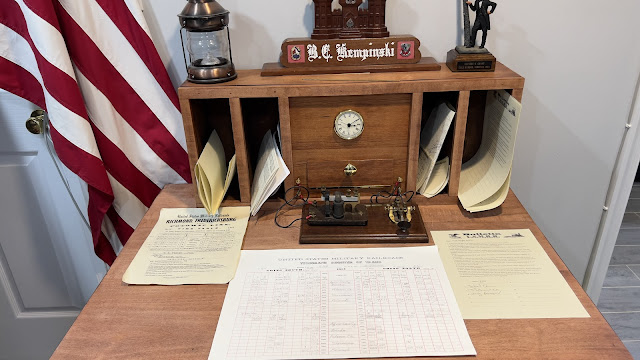
Dispatcher Office ready to go. You can se the schedule, train sheets and bulletin. 

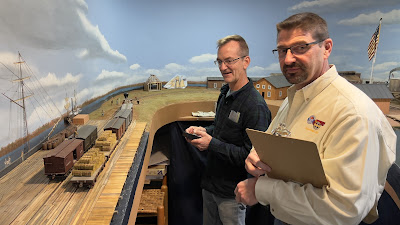
I hosted an operation session on Friday for visitors from New Jersey. Tom Piccirillo, Andy Brusgard, Tom Schmeider and Mike Quinn arrived at the house for an afternoon session. 

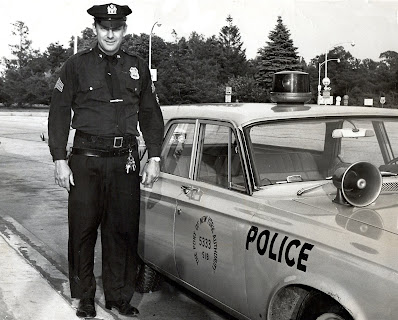
My father at Kennedy Airport
I found it interesting that 3 of the 4 operators were retired police officers. Andy retired after 52 years of service. My dad was a a police officer for the Port of New York Authority, so I feel a kinship with policemen.

Op Session

Tom P. and Andy arrived early so I assigned them train 8 from Falmouth with engine Haupt. We operated under the rule that trains originating from Falmouth with scheduled meets at Brooke are limited to 8 cars maximum. So they left Falmouth with 8 cars.  

Later Tom S and Mike are arrived. They took Train 7 as soon as they read the bulletin.  To their credit, they had read the advanced paperwork and pretty much knew what to do as soon as they arrived despite being first time operators on the Aquia Line.

Train 8 arrived at Brooke for the scheduled meet before 7.  Being the train in an inferior direction, they had to wait for 8 to arrive. It was interesting that 7 needed to pick up a car at Brooke and 8 had a car to drop. So, the crews coordinated their actions to expeditiously do the job. 

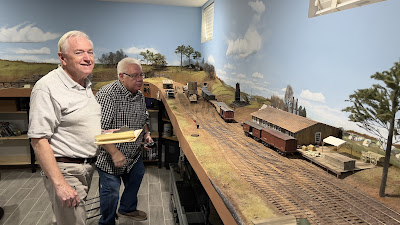
Andy and Tom P - both had operated here before
Train 8 continued on but forgot to drop off two cars for Stoneman's. They decided to take the cars to Falmouth, vice flagging and backing up to Stoneman's, and then back haul them to Stoneman's when they departed Falmouth. This is not ideal because now the drop required a facing point move and they had to use the extended couplers on the nose of the engine. The extended links are more difficult to use than the regular link and pins, but they got it done.

Meanwhile, train 7 arrived at Aquia Landing. Unfortunately, at that point engine Haupt started to malfunction despite running fine beforehand. After some unsuccessful debugging, we switched engines McCallum for Haupt, and they attempted to finish their run. They assembled the train 9, but never did run it as they ran out of time as they had to leave to check into the hotel. 

Mike and Tom S.
The dispatcher annulled train 9, but Tom S. and Mike wanted to stay and finish their run with train 10. I have noticed in the past few sessions that the longer trains that we now run take a lot longer to work. I may need to adjust the schedule if we continue to find that the scheduled times are insufficient.  The link and pin couplers definitely slow down the process, especially for new crews.  

The random events procedure worked well. The crews pulled three cards. Two were minor events with no operational effect. The third card for crew of 10 required them to stop at Potomac Creek for 10 minutes to load troops whose enlistments were expiring.

Other than the Haupt issue, the ops session went well.

Mat Thompson hosted a group dinner at his house on Friday night. The group dinner is always a highlight of the NJ-DMV Interchange weekend. Mat's layout is also a nice treat to see too. 

Greg Viggiano observes John Steitz  running trains
during the open house 

Open House

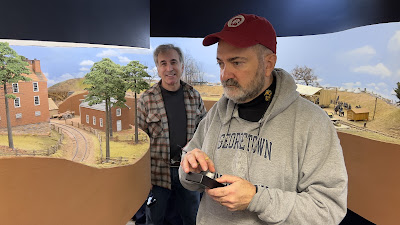
On Saturday I hosted an open house for the NJ-DMV folks plus local friends. About 15 folks arrived to se the layout. John Steitz, Mike Spoor and Amby Nangeroni ran trains while the guests looked around and asked questions.

Alicia made chocolate brownies which were all gone by the end of the open house

Problems

We discovered that Whiton, one of my  Mason engines with battery power was sparking on the tender trucks. The engine continued to run despite the sparks. The shorts on the tender trucks is  a common problem with the Masons from SMR Trains.  It may be due to the insulating paint wearing off the brass parts as the engines operate. Charlie Taylor also reports similar problems with his SMR Masons. I need to add insulation washers to all the Mason engines. I am also thinking about making make new 3D printed resin trucks for these engines. The resin will help eliminate some of these intermittent electrical shorts. Also, Engine Oscela has a broken wire to the front truck that I need to repair. 

John Steitz reported that the passenger car was picking frogs when he was running. It had not been doing that when I ran it, so I need to check it out. 


November 15, 2022

Crunch Time, Again

 The NJ-DMV Interchange is scheduled for this weekend. So local layout owners are in crunch time getting ready for the meet. I have been doing some tasks to help others to get ready. My layout is ready to go except for some minor repairs such as a broken switch stand from a last op session. 

One of the embellishments to operations on my railroad that I wanted to get done was to make random events cards.  I wrote about this idea earlier in this post. 


Last night I printed a set of random event cards. Most of them involve delays of some duration, longest is 15 minutes. A few require cars to be set out. About one third have no operational impact. 

I am trying to decide how to trigger the random event.  For now, I am going to place them near Brooke Tunnel and Stares Tunnels. Each train will draw a card when the pass Brooke going southbound or Stares Tunnel going northbound. That why I can have one box near both tunnels to house the cards. I am curious to see how they work out.


Meanwhile, I have been helping Marty McGuirk with building the paper mill for his layout.  

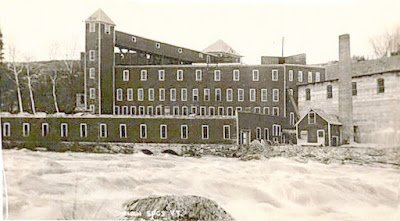
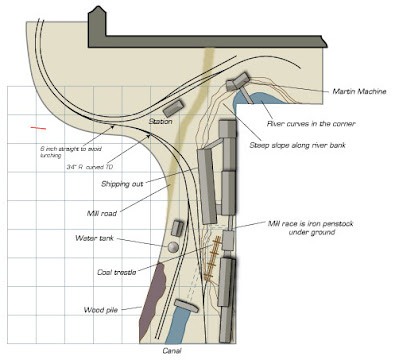
About 2 months ago I helped Marty with a redesign of the paper mill area of his layout to better match the prototype he was trying to model. The drawing shows the design I proposed to him.  You can see that the mill is a large complex and will be an important location for operations on his layout.


The clapboard building is 30 by 12 inches with some compression to fit the layout. The full prototype size in HO is about 36 by 12 inches. There are other structures in the complex that will be nearly as big. 

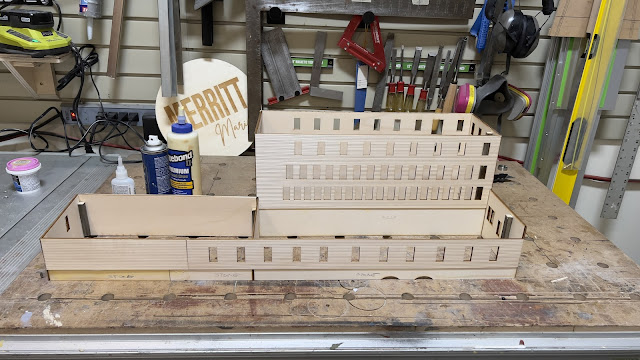
The photo below shows the first batch of laser cut parts that I cut for the building while they are in the glue up. Marty will install the windows and roofs. There are several other big buildings in the paper mill complex.


I have also been helping Doug Gurin with his layout design. He wants to have a refined drawing to show to the visitors this weekend.

 I also have a small modeling project to complete for Henry Freeman as he will be in town to operate and  pick up this model.

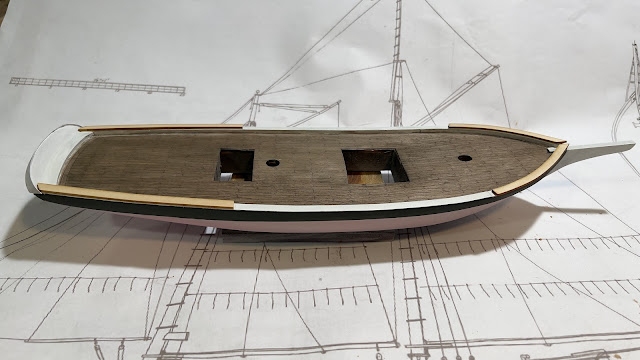
In between all that, I made some progress on the Pungy. I painted the hull and added stem and stem head. Next  I will install the railings and deck furniture. But that will have to wait until the weekend is over.


November 6, 2022

Pungy Fever

Replica pungy schooner in a race on the Chesapeake

The delivery of the schooner Smuggler has got me psyched to start working on other ships for the layout.  I have a list of ships that I would like to have at Aquia Landing and Burnside Wharf. They are listed below in order of the state of completion of the model.


Wish List

  1. Railroad car ferry - complete
  2. Smuggler Schooner - complete built by Brian with some help from Rob. I will rename it Miss Merritt Marie
  3. Barges- 3 including one that has masts. Paul Dolkos built one for me. Two to go.
  4. Side Paddlewheeler - I have the Mt Washington kit and need to finish it.
  5. Pungy schooner - I started work on one - see below. 
  6. Pile Driver -  I am accumulating the necessary parts. I have some of the parts already.
  7. Swift Pilot Schooner   I have a kit 1/48th Swift Pilot ship. It is a simpler schooner but the kit is plank on frame. So converting to waterline could be tricky
  8. Tug boats- 2 each - one for the railroad ferry and another along side some of the barges.
  9. Steam transport -  I see several of these in prototype photos. They are like large versions of the tugs but with at least one sail mast. 
  10. Gun boat. A smaller gunboat like the USS Couer d'Lion would be better than the Passaic. 
  11. Baltimore clipper -  I see some of them in photos of Aquia Landing.  I ordered a kit for the 1/48th scale Harvey for this. That ship was built in 1847.  That is a complex sail boat with square and fore and aft rigged sails. It would take a lot of time to build but would be a wonderful addition. 
Note the ironclad Passaic is not on the final list. It is too big for the layout. I need to think of a better way to display it short of expanding the harbor scene. Nor is the Flying Fish schooner on the final list. I bought it from a custom model builder, but they got the scale wrong. I don't think it can be salvaged or converted. If anyone needs a 1/64 schooner, let me know. 


The Pungy

The arrow points to what appears to be a pungy schooner at Aquia Landing as it has the right shape and the traditional two toned paint scheme of pink and green.


N scale Pungy

A pungy is a type of schooner that was common on the Chesapeake Bay in the mid 19th century. I built a model of one in N Scale for the Lyceum Museum in January 2016. At that time I thought it would be a good ship to model in O scale for my layout.

I based the model on a set of plans I scanned from a book on Chesapeake schooners. The one I selected was built in 1863. I enlarged  a copy of the plans and then had Staples print 3 sets of them. 


O scale hull layers
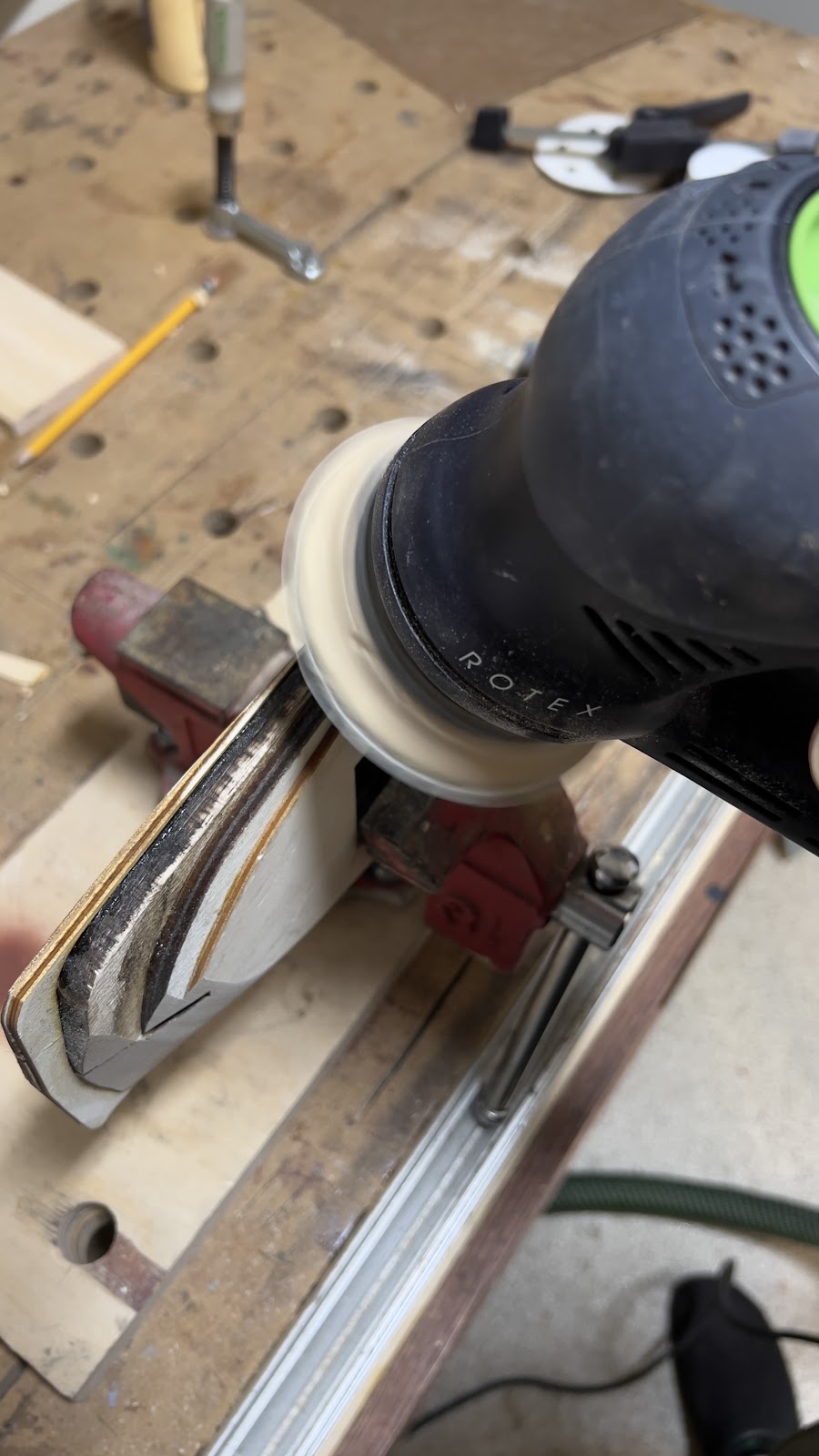
I have the drawings for laser cutting the hull from the N scale model. So I was able to scale them up and use the laser to cut parts for the basic hull using the bread and butter technique. I glued and clamped those to make the basic hull shape. Then I used my Rotex sander to get the basic shape. It took about 2 hours to cut and shape the hull.  Then it needed several coats of filler and primer. Sanding the camber on the hull top was tricky. In the future I will make laser cut parts for the camber like I used on Passaic.


Once I had the basic hull shape I laser cut the deck planking. I used the laser to engrave the planks, the joggled planks around the perimeter, and  the treenails/wooden nail plugs. By the time of the ACW, ship builders used nails and wood plugs instead of treenails. But in scale, the wood plugs almost look like treenails. They are only 0.015 inches in diameter. So the engraver could handle them and allowed me to avoid a tedious task. 

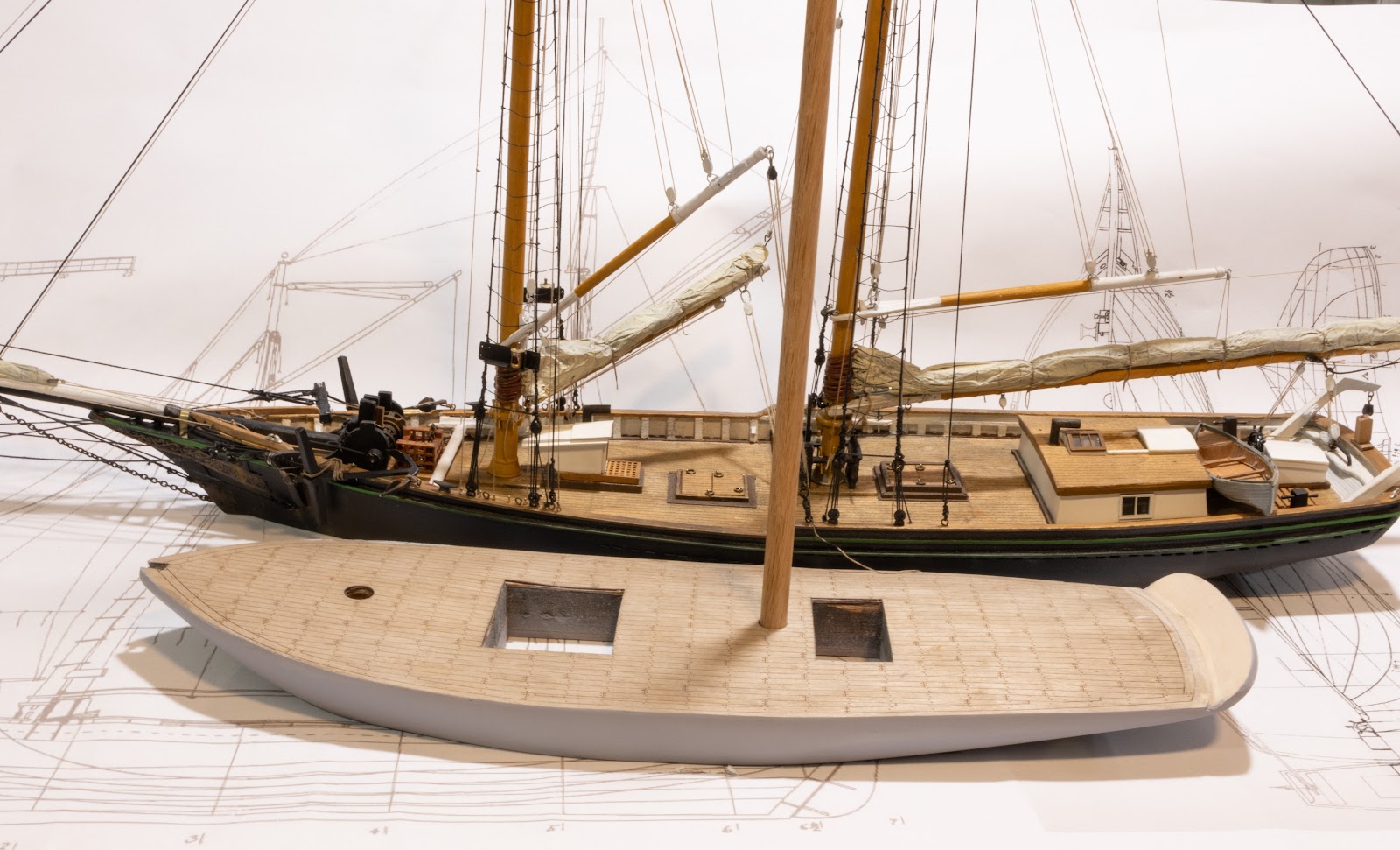
Here is a shot showing the pungy next to the Miss Merritt Marie. Although not as long, the pungy's masts are nearly as tall as the bigger schooner.  Pungies were known for fast sailing partly due to the huge sails. 

Next I need to add the low railing around the hull. Pungies did not have a large bulwark. There was also monkey rail around the cockpit area, but it was not very tall. They must have been wet sailers in a rough sea.. 


In other news, I replaced the trucks on box car 1344. It was intermittently derailing when running in a train. I suspected the cast metal trucks were the culprit. So I replaced them with the new 3D printed resin ones. We'll see if that fixed the issue.